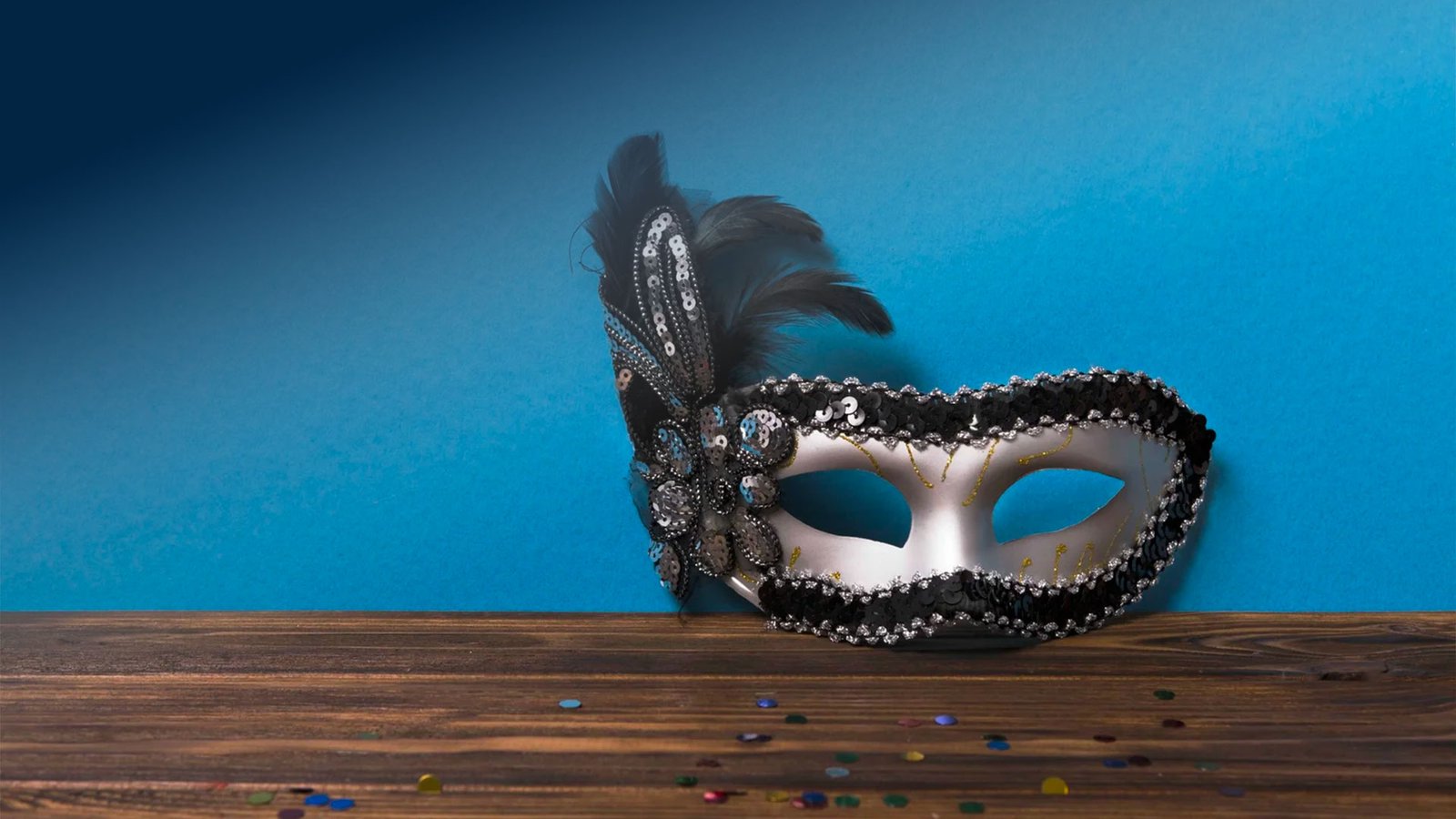
Carnival and leadership: leadership without masks
Leadership without masks is the ability to recognise how often, in organisations, we wear roles that protect us but take us away from who we really are.
Carnival comes round every year with its explosion of colours, masks and costumes. It’s the festival where pretending is socially accepted, where we can appear different from who we are without consequences.
But what happens at Carnival is only the declared version of something we experience every day. We don’t wear masks once a year: we wear them daily.
Not for fun.
Out of fear.
Fear of not being enough.
Fear of not being accepted.
Fear of losing position, approval, belonging.
And often we’re not even aware of it.
In the workplace, especially when it comes to leadership, the mask becomes an invisible organisational mechanism. When a leader doesn’t recognise this dynamic, company culture is built on performance and people-pleasing, not on truth and accountability.
Emotion or mood? The difference that changes leadership
Emotions are functional. Always.
Fear protects us from real danger.
Anger defends a boundary that has been crossed.
Sadness processes a loss and brings us back to our centre.
A healthy emotion is movement. It has a beginning, a function and an end.
The problem arises when an emotion crystallises and becomes a permanent psychological structure. When it stops being a response and becomes an identity.
Then:
Fear becomes chronic anxiety.
Anger becomes resentment.
Sadness becomes structural distrust.
At that point we are no longer talking about emotions, but about dysfunctional moods that shape behaviours, relationships and organisational culture.
And this is where the mask is born.
1. When fear becomes people-pleasing
In most workplaces, fear isn’t about survival but about belonging:
fear of being excluded
fear of being judged
fear of losing status or opportunities
When fear becomes chronic, it produces people-pleasing.
We adapt to be accepted.
We say what reassures.
We avoid conflict so as not to cause trouble.
The result?
We lose ourselves rather than lose the other person.
In an organisation, this creates teams that look aligned but are deeply disconnected.
2. When anger becomes a reactive identity
Getting angry is healthy. It means recognising a wrong and protecting a boundary.
But when anger isn’t integrated, it becomes embers under the ashes.
It no longer serves reality: it distorts it.
It turns into:
constant judgement
defensiveness
self-blame or blaming the system
This is how a reactive identity is born.
The leader reacts instead of leading. The team member defends instead of contributing.
The mask, in this case, is one of hardness.
3. When sadness becomes calculation
Genuine sadness gives us depth. It allows us to lovingly welcome our inner voices.
But when it hardens into distrust, it produces a way of being that looks adult and strategic: relational calculation.
We adjust words, tone and content to suit our interests.
We only show what is convenient to show.
This is how the functional identity is born: effective, high-performing, accepted.
But disconnected from the self.
Strategic leadership: why masks are a risk
Strategic leadership doesn’t look for masks. It unmasks them.
An organisation only evolves when people no longer have to put on an act.
A mature leader knows that alignment achieved through:
fear,
people-pleasing,
calculation,
is fragile, superficial and sterile.
An environment where everyone says the right thing is an environment that has stopped thinking.
A strategic leader wants:
real information
intelligent disagreement
people who challenge them
genuine feedback
Because masks take away data.
They take away complexity.
They take away reality.
And without reality there is no strategy.
The questions every leader should ask themselves
Am I rewarding those who reassure me or those who challenge me?
Are meetings genuine conversations or well-orchestrated performances?
Do my team members tell me what they think, or what they believe I want to hear?
When someone makes a mistake, do I react with curiosity or with judgement?
Organisational culture always reflects leadership.
How to build leadership without masks
1. Accept complexity
Only what is alive can innovate.
Complexity isn’t a problem to eliminate, but an ecosystem to understand.
2. Create psychological safety
Honesty must not be punished.
If telling the truth puts you at risk, the mask becomes survival.
3. Show vulnerability
A leader who admits doubts gives permission for authenticity.
Vulnerability doesn’t weaken authority: it roots it.
4. Reward courage
Strategy grows through difficult truths, not through people-pleasing.
And what if the leader doesn’t change?
There are three options:
1. Adapt, paying the price of disconnection from yourself.
2. Create micro-spaces of authenticity.
3. Look for an ecosystem where the mask isn’t the currency of success.
Carnival as a metaphor for organisational culture
At Carnival, the mask is a game.
In professional life it isn’t.
It’s organised fear.
It doesn’t show who we are, but what we think will be approved.
It isn’t freedom. It’s protection that becomes a prison.
Like Canio in Pagliacci:
«Vesti la giubba e la faccia infarina… ridi, Pagliaccio, e ognun applaudirà…» (“Put on your costume and powder your face… laugh, clown, and everyone will applaud…”)
The mask demands performance when inside we are bleeding.
It’s applause instead of truth.
Approval instead of presence.
The role instead of the face.
Beyond the mask: a leader’s real growth
Growth isn’t about becoming a better actor.
It’s about no longer being one.
It isn’t a matter of choosing the right mask, but of letting it dissolve.
Going back:
to a fear that protects the body, not an anxiety that consumes it
to an anger that defends a boundary, not a resentment that builds walls
to a sadness that integrates, not a distrust disguised as clear-sightedness
Then Carnival ends.
Not because you remove the last mask, but because you recognise your skin.
Your own.
The one that breathes.